AI has moved from a buzzy headline to a boardroom agenda item in record time. Companies across industries are weighing its benefits, its risks, and even the role it should play in sustainability work. The pace of change is fast, and many teams are trying to understand what AI will realistically mean for their energy planning and climate strategies in the coming years.
In this blog, we outline three predictions for 2026 and beyond, including how AI may influence clean energy development, long-term electricity demand, and the evolution of corporate sustainability work.
If you want a deeper look at how sustainability teams are using AI today, you can download our report on AI use in corporate sustainability.
Prediction 1: The AI data center boom will increase clean energy development
AI is beginning to change how companies and utility providers think about electricity demand. Historically, utilities planned for slow and predictable growth tied to population and the broader economy. However, bringing even one AI data center online can add the same continuous electricity load as powering a small city.
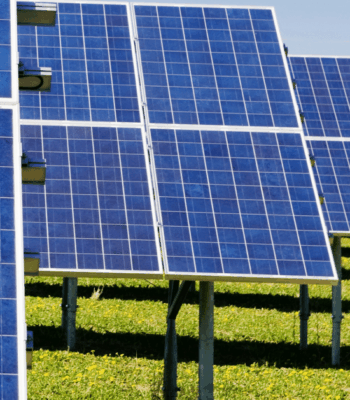
Coal and gas plants cannot be built or ramped up quickly enough to meet these rising needs, and slow transmission expansion will continue to limit how fast new power can reach demand. In many cases, the only technologies that can scale fast enough will be renewables and grid-scale storage, such as large battery systems that can store excess solar and wind power and deliver it when demand spikes. As Ty Colman, Co-Founder and CRO at Optera, explains:
“Renewables accounted for over 90 percent of the new utility-scale generating capacity in 2024, partly because they are faster to deploy and easier to scale. This reality will push utilities, investors, and governments to accelerate clean energy projects in 2026, making AI’s appetite an inadvertent catalyst for the energy transition.”
— Ty Colman
As energy demand grows faster than traditional infrastructure can keep up, clean energy will become the most practical path forward. Utilities and developers will move toward projects that can be built quickly, reduce risk, and support the rapid growth of AI-driven load.
Prediction 2: The AI boom is real, but long-term energy demand will be lower than expected
The surge in AI use and investments has created some of the most dramatic electricity demand forecasts in years. Many projections anticipate steep, long-term increases in data center load, with some forecasts assuming growth will continue at an exponential pace.
However, as organizations gain a clearer sense of where AI truly adds value, adoption may become more focused. Efficiency improvements in both models and hardware could also reduce the amount of energy AI systems will require to operate. As Tim Weiss, Co-Founder and CEO at Optera, notes, the current wave of forecasts may reflect more hype than long-term reality:
“While AI is transforming our economy, forecasts of exponential data center demand growth likely overshoot what will actually occur by a significant margin. This is a gold rush scenario, and I’m optimistic that the dramatic spikes in energy demand will be more tempered than forecasts suggest.”
— Tim Weiss
This perspective does not dismiss the real, immediate strain AI is likely to put on the grid. Instead, it points to a future where long-term energy needs may stabilize as the technology matures and companies deploy it more selectively.
Prediction 3: AI will start powering early forecasting and scenario modeling
AI’s impact on sustainability will not arrive all at once. The first wave is already emerging as companies begin to use AI to organize data, automate reporting tasks, and respond to rising stakeholder requests. This early stage is aimed at reducing the manual work that has traditionally slowed sustainability teams.
The next wave will be more strategic. Once the reporting foundation is stable, AI could begin supporting things like predictive modeling, scenario analysis, and forward-looking climate planning. As Alekhya Reddy, VP of Product at Optera, explains:
“AI will reshape corporate sustainability in two distinct waves. The first is reporting and data organization. AI will eliminate hours of manual work here. But once that operational foundation is solid, we’ll unlock the real power: predictive modeling, scenario analysis, and understanding where companies are actually headed with their climate commitments.”
— Alekhya Reddy
As AI capabilities improve and companies gain confidence in where to apply them, the technology will start informing early forecasting and scenario analysis, offering teams better visibility into future risks and opportunities.
Conclusion
Together, these predictions point to AI’s expanding role in shaping energy demand, influencing the clean-energy landscape, and offering companies new ways to accelerate their climate work. What’s clear is that AI’s impact won’t be linear — it will unfold across the energy system and corporate sustainability at the same time. The companies that stay curious, grounded, and adaptive will be best positioned to make meaningful progress as these shifts accelerate.
If you want to see how sustainability teams are already experimenting with AI today, you can download our report on AI use cases in corporate sustainability.